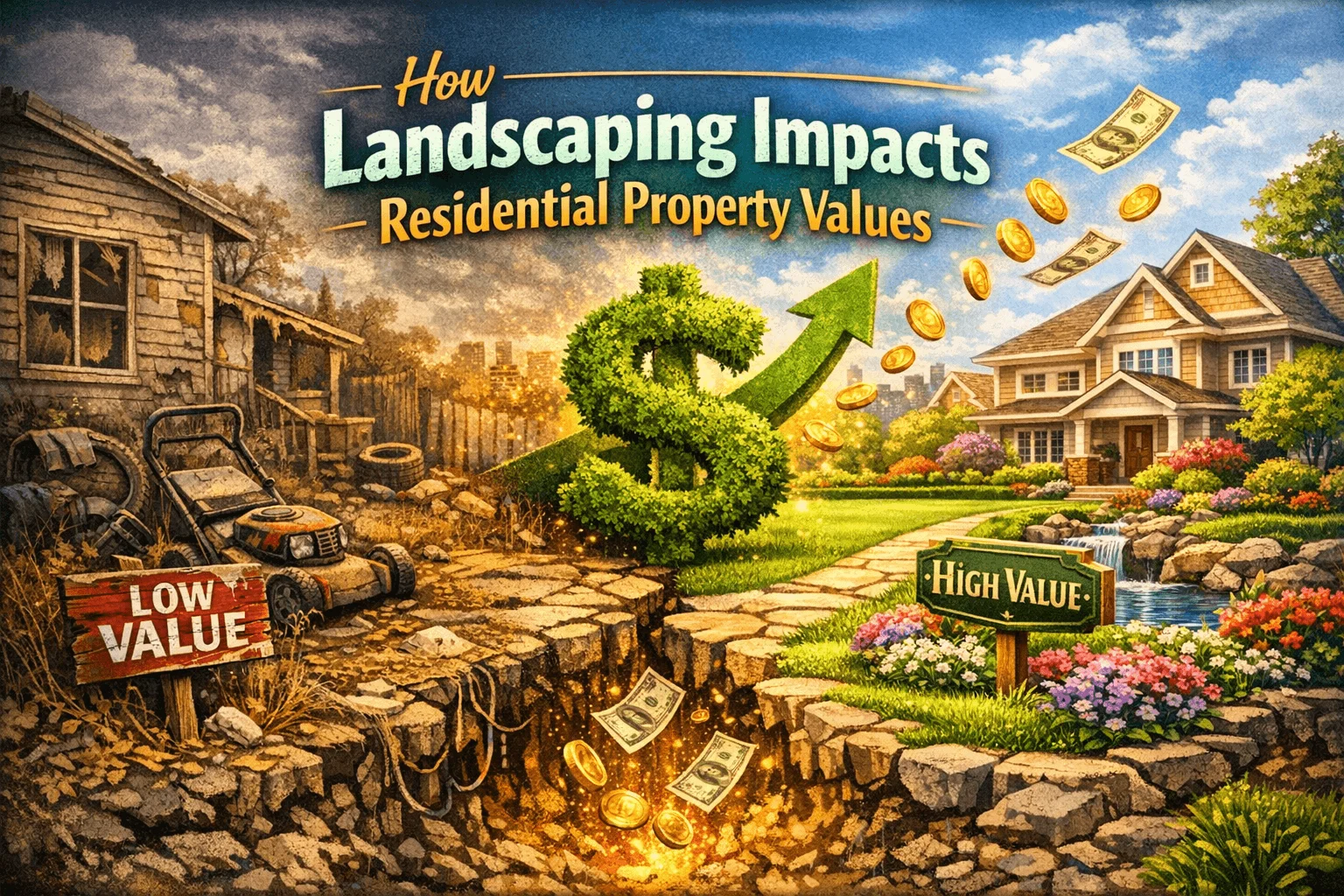
Most homeowners think about kitchens and bathrooms when they want to boost their home’s value. That makes sense. But here’s what a lot of people overlook: the outside of your house talks to buyers before they ever step through the front door.
Landscaping isn’t just about making things look nice. It’s a real financial lever. And the numbers back that up.
The First Impression Problem
The National Association of Realtors found that 97% of its members believe curb appeal is important when attracting buyers. Not “kind of” important. 75% said it was very important. That’s nearly every working real estate professional telling you the same thing.
Think about it from a buyer’s perspective. You pull up to a house with patchy grass, cracked walkways, and overgrown shrubs. What’s your gut reaction? You start wondering what else has been neglected. The roof. The plumbing. The foundation. A messy exterior plants doubt, and doubt kills offers.
On the flip side, a well-kept yard signals that the homeowner cares. It builds trust before a single word is spoken. That emotional response translates directly into what someone’s willing to pay.
What the Data Actually Says
Let’s get specific. According to multiple industry studies, professional landscaping can increase a home’s value by 5.5% to 12%. On a $400,000 home, that’s $22,000 to $48,000 in added value. Not bad for something most people treat as an afterthought.
The ROI numbers get even more interesting when you break them down by project type. Standard lawn care, things like fertilizing, weed control, and regular mowing, delivers a 217% return on investment according to NAR’s Remodeling Impact Report. General landscape maintenance like pruning and mulching comes in at 104% ROI.
Those aren’t typos. Basic upkeep pays for itself twice over, sometimes more.
92% of realtors have recommended that sellers improve curb appeal before listing. When almost every professional in an industry agrees on something, it’s probably worth listening.
Hardscaping: Where the Real Value Hides
Softscaping (plants, grass, garden beds) gets most of the attention. But hardscaping is where serious property value gets built.
A paver patio or walkway does something grass can’t: it creates usable outdoor living space. Buyers don’t just see pavers. They see summer barbecues, morning coffee outside, kids playing on a clean surface. That mental picture has dollar signs attached to it.
Patios can recover up to 95% of their installation cost at resale, according to NAR data. Paver walkways and driveways score high too, because they solve practical problems (drainage, accessibility, durability) while looking sharp. A well-designed paver installation (https://www.montrealpaysageme
Hardscape features also require less ongoing maintenance than lawns and gardens. That’s a selling point in itself. Buyers increasingly want outdoor spaces that look great without demanding weekends of upkeep.
Trees, Shade, and the Long Game
Mature trees are one of the most underrated property value boosters. Research shows homes with established trees sell for 3% to 15% more than comparable properties without them. The catch? Trees take years to grow. You can’t rush this one.
But that’s exactly why they add so much value. A 30-year-old oak in the front yard signals permanence and stability. It provides shade that cuts cooling costs in summer. It creates privacy. These are things buyers want but can’t easily replicate.
If you’re planning to stay in your home for five or more years, planting trees now is one of the smartest investments you can make. The cost is minimal. The payoff compounds over time.
What Kills Property Value Outdoors
It’s not just about what you add. Neglect actively destroys value.
Dead patches in the lawn. Crumbling retaining walls. An old concrete slab with weeds growing through the cracks. A fence that’s leaning sideways. These things don’t just look bad. They signal deferred maintenance, and buyers adjust their offers downward accordingly.
Sellers often see about a 7% increase in home value after curb appeal improvements. That means the gap between a neglected exterior and a well-maintained one could easily represent tens of thousands of dollars on a typical residential sale.
The Neighborhood Effect
Here’s something that doesn’t get discussed enough: your landscaping affects your neighbors’ property values too, and theirs affects yours.
A well-maintained street where most homes have decent landscaping creates a halo effect. Appraisers and buyers both notice it. When one house on the block lets things slide, it drags down comparable sales for everyone nearby.
This is why some of the best returns on professional landscaping services (https://www.montrealpaysageme
Practical Takeaways for Homeowners
If you’re looking at landscaping as an investment, here’s what makes the most financial sense:
Start with maintenance. Mowing, edging, pruning, and mulching deliver the highest ROI of any outdoor project. Get the basics right first.
Add functional hardscaping. A paver patio, walkway, or driveway extension creates usable space that buyers value. Aim for clean designs that complement the house rather than compete with it.
Plant for the future. Trees and perennial shrubs appreciate over time. Choose species appropriate for your climate and give them room to grow.
Fix what’s broken. A cracked driveway or leaning fence hurts you more than a missing flower bed. Address structural and safety issues before cosmetic upgrades.
Keep it proportional. Over-improving your yard relative to the neighborhood rarely pays off. Match or slightly exceed the local standard. Going way beyond it means you’re spending money you won’t recover.
The Bottom Line
Landscaping sits at this unusual intersection of emotional appeal and hard financial returns. It’s one of the few home improvements where you can spend relatively little, see results quickly, and recover most or all of your investment at sale.
The numbers are clear. Buyers care about what they see from the curb. Realtors know it. Appraisers factor it in. Whether you’re planning to sell next year or just want to build equity over time, your yard deserves the same strategic thinking you’d give to any other part of your home.
