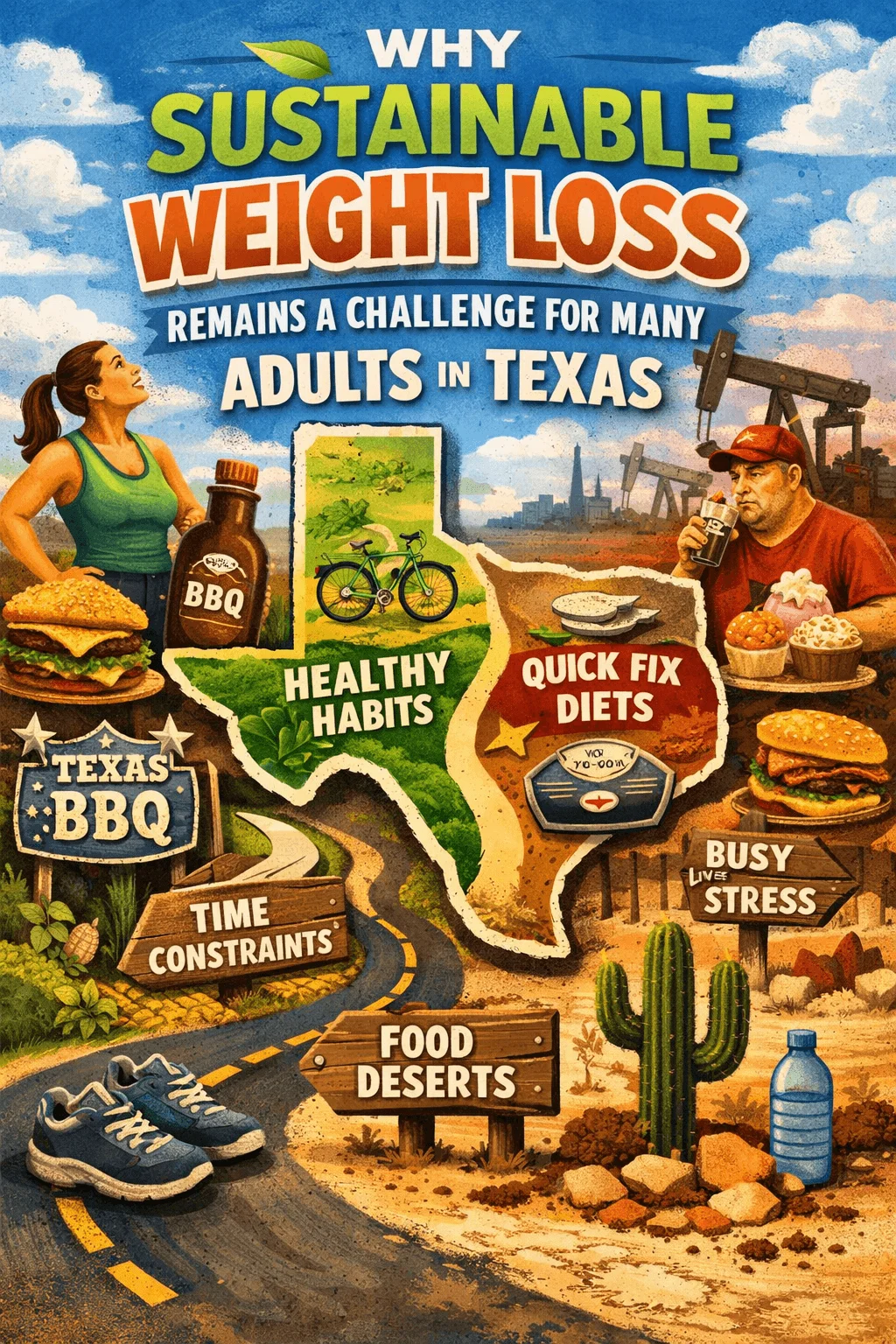
Across many communities in Texas, including areas like Montgomery and Willis, maintaining a healthy weight has become increasingly difficult for adults of all ages. While weight loss is often framed as a matter of discipline or lifestyle, the reality is far more complex. For many individuals, weight gain is tied to underlying metabolic, hormonal, and environmental factors that are not always visible or easy to address.
According to data from the Centers for Disease Control and Prevention (CDC), obesity rates in the United States remain elevated, with Southern states experiencing some of the highest prevalence. This trend is not just a statistic—it reflects real challenges faced by individuals trying to balance work, family responsibilities, and their own health.
Why Traditional Weight Loss Advice Often Falls Short
For years, the dominant message around weight loss has been simple: eat less and move more. While this advice is not entirely wrong, it is often incomplete. Many people follow strict diets or intense exercise routines, only to find that results are temporary or inconsistent.
One reason for this is that weight regulation is influenced by multiple systems in the body. Hormones such as insulin, cortisol, and thyroid hormones all play a role in how the body stores fat and uses energy. When these systems are not functioning optimally, even well-intentioned efforts may not lead to meaningful progress.
Additionally, modern lifestyles contribute to the problem. Chronic stress, poor sleep quality, and highly processed food environments all make it harder for the body to maintain metabolic balance. Over time, these factors can create resistance to weight loss, even in individuals who are actively trying to improve their health.
The Hidden Role of Metabolic Health
One of the most overlooked aspects of weight management is metabolic health. Two people with similar body weight may have very different metabolic profiles, which can significantly affect how they respond to diet and exercise.
Conditions such as insulin resistance, for example, can make it easier for the body to store fat and harder to access it for energy. This often leads to persistent weight gain or difficulty losing weight, even when calorie intake is controlled.
Research supported by the National Institutes of Health (NIH) emphasizes that obesity is not simply a behavioral issue but a chronic condition influenced by biology, environment, and genetics. This perspective is shifting how healthcare providers approach weight loss—moving away from generic advice toward more individualized care.
Why Quick Fixes Can Do More Harm Than Good
In response to frustration with slow progress, many individuals turn to quick-fix solutions such as extreme diets, detox programs, or unregulated supplements. While these approaches may produce short-term results, they often come at a cost.
Rapid weight loss can lead to muscle loss, nutrient deficiencies, and metabolic slowdown. In some cases, it may even worsen the underlying issues that contributed to weight gain in the first place. When the body perceives extreme restriction, it adapts by conserving energy, making future weight loss even more difficult.
This cycle—lose weight quickly, regain it, and repeat—can be discouraging and physically taxing. It highlights the importance of approaching weight loss as a long-term process rather than a short-term goal.
A Shift Toward Personalized, Medically Guided Approaches
As understanding of weight management evolves, there is a growing emphasis on personalized, medically guided approaches. These programs take into account the individual’s full health picture rather than focusing solely on body weight.
Instead of asking “How do I lose weight quickly?”, the question becomes “What is preventing my body from responding normally?” This shift allows for more targeted strategies that address root causes such as hormonal imbalance, metabolic dysfunction, or chronic inflammation.
Medical oversight also helps ensure that weight loss is achieved safely. Monitoring factors such as muscle mass, nutrient status, and cardiovascular health can prevent unintended side effects and support better long-term outcomes.
Building Sustainable Habits That Actually Last
One of the most important aspects of successful weight loss is sustainability. Programs that rely on extreme restriction or unrealistic expectations rarely lead to lasting change. In contrast, approaches that focus on gradual improvement, consistency, and adaptability tend to produce better results over time.
Sustainable weight loss is not about perfection. It is about creating a system that fits into real life—one that can be maintained even during periods of stress or change. This often includes balanced nutrition, regular movement, adequate sleep, and ongoing support.
When these elements are aligned with an individual’s biology and lifestyle, weight loss becomes less of a struggle and more of a natural progression.
Local Support Can Make a Meaningful Difference
For individuals in Montgomery and Willis, TX, access to personalized care can play a significant role in improving outcomes. Working with experienced providers who understand the complexity of weight management allows for more accurate assessments and more effective strategies.
At Enhance Anti-Aging, weight loss is approached through a medical and individualized framework rather than a one-size-fits-all model. Click here to find out more. The focus is on identifying underlying factors, creating tailored plans, and supporting patients throughout their journey.
If you’re exploring ways to improve your health and feel better in your body, reaching out for professional guidance can be a valuable first step. If you are interested in our services, contact us and we will help you feel better with a plan designed specifically for your needs.
